Article by PhoenixOnline Writer James Watkins ’26
Generous, righteous, and revolutionary! In all likelihood, this is what went through the minds of many people when learning about Billie Eilish’s donation of $11.5 million to charity. While doing this, she called out billionaires for their “cowardice” and perhaps changed some hearts for the benefit of the underprivileged. This could be a tremendous step forward for humanity: could you imagine donations such as hers, totalling nearly twenty percent of her estimated net worth of $54 million!?
Sounds like a lot. But is it?
Take Chuck Feeney, for example, a highly successful co-founder of the Duty Free Shoppers Group who, at first, kept his philanthropy secretive. By the time of his passing, he had given all $8 billion of his fortune to charity.
In Feeny’s case, the noble cause was present, but it took until death to give it away. So did his generosity, his charity “hurt”?
Seeing such immense amounts of money being spent without any real effect of sacrifice made by a person and the failure of making any difference can obliterate one’s hope of reforming society for the better. The average person cannot give half of that sum, but is that what we are called as Christians to do? Are we called to give the most colossal amount of our property and fortune only when it will benefit us? Only when we’re done needing it in life? If there is nothing felt when giving, is there any real sacrifice? The answer is no. There should not be a “percent” of what we give to the world.
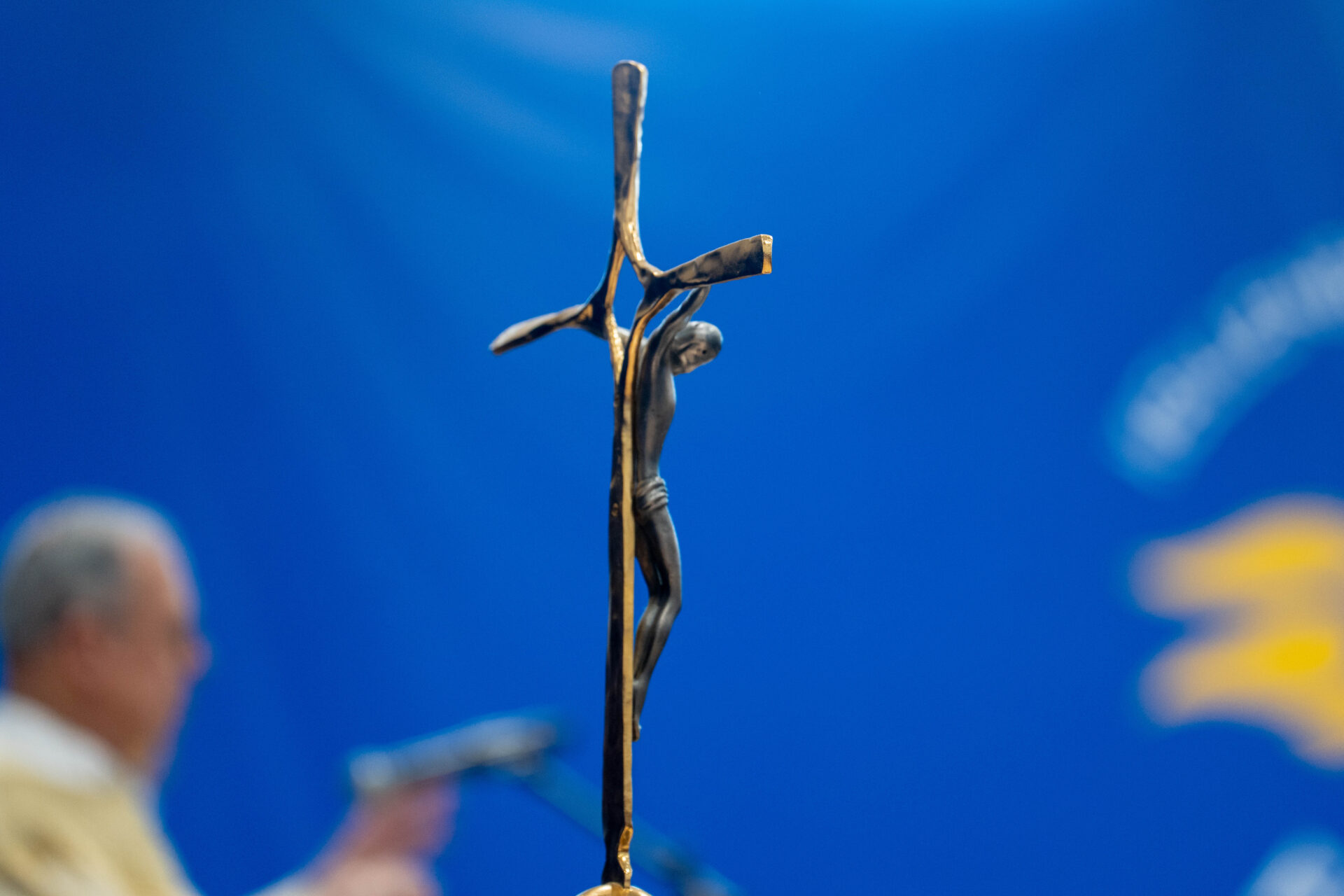
A hard pill to swallow is that Christian love hurts. Jesus tells us to take up our crosses and follow Him, yet it is not as easy as it seems. We are called to love even when loving might not benefit us.
In Chapter 21 of Luke’s Gospel, Jesus witnessed people putting gifts into a treasury. All of the rich gave theirs, but a certain widow gained Jesus’ attention: she put in exactly two coins, far less than the rich folks around her.
Jesus said of her, “Truly I tell you, this poor widow has put in more than all of them; for all of them have contributed out of their abundance, but she out of her poverty has put in all she had to live on.”
While the widow’s total contribution might be considered little, the widow did not give only a “percent” of what she had, but instead gave all that she had out of the goodness of her heart regardless of her struggles.
We must ask ourselves if we are giving enough. Of course, anything we share monetarily will help others, but do we give ourselves to the world and to God?
Jesus told Peter to give up everything and follow Him. Everything? Everything. We can talk for days about what “everything” Jesus meant and how much of that everything He really meant for us to part with, but no matter what, any degree of everything will result in some discomfort, some pain. Accordingly, the painful sacrifice of Christ on the Cross is the single greatest exhibition of Christian love
There is effort put into love. There is work needed to love in a Christian way. And that work and that effort begins with the first step: faith. If Simon Peter was able to walk on water with the power of God, we are capable of fully giving everything of ourselves. Even if it hurts.
In his letters to the Corinthians, Paul states, “And now faith, hope, and charity abide, these three; and the greatest of these is charity,” selfless love for God and others. Love itself is the ability to sacrifice for the sake of another. So one question still lingers: how will they know us? Well, we will not be known by how many zeros we write on the check or by how much we might publicize our deeds to the world. They will know us when we love to the point of losing ourselves to someone else. It is our mission as Catholics then to be not a dollar sign but a sign of God’s love. In this way, they will know us.