Article by Elizabeth Kalin Tynan ’26
Just over 80 Sophomores and Juniors gathered together to explore government, community, and real-world issues in Kellenberg’s new early morning Civics Course.
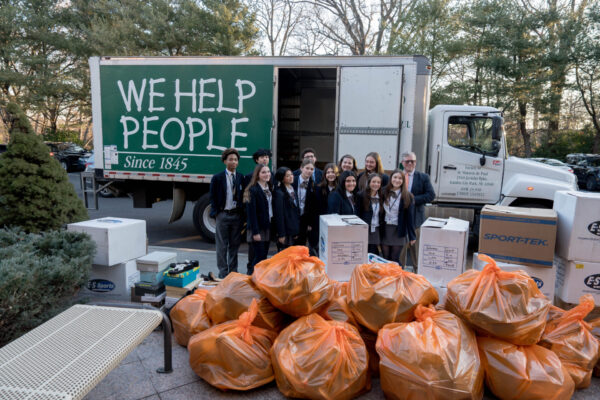
Taking place biweekly from October 21 to February 12, the group met for a total of 27 class sessions before school from 7:20 AM to 8:00 AM in the Latin School Chorus room. Mr. Cartier and Mr. Benintendi, history teachers and Civics course organizers, focused on the goals of shaping community and engaging in local government. Some of the components included speeches from members of the local government. In addition, the students took real action to support those in need by participating in the St. Vincent de Paul annual shoe drive, in which students collected 542 total pairs of shoes.
One requirement for credit was a submission to America250’s national Field Trip, a contest celebrating the 250th anniversary of the United States. Students submit writing or artwork inspired by the prompt “What does America mean to you?” They have the chance to win a trip across the country in the summer or a cash prize. Student feedback was greatly utilized in the course: each comment and suggestion was valued and regular class discussion embodied the theme of community and problem-solving.
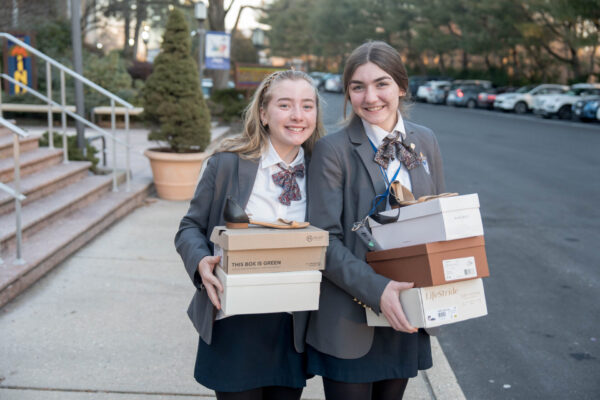
Junior Valentina Ramirez, shares, “I like it because it brings in personal experiences. We see how the community has changed before and how we can change it in the future.”
While parts of history class for Juniors and Seniors are dedicated to civics, there has been nothing like this at Kellenberg before now. The course dives into the nitty-gritty of the rights and responsibilities of United States citizens and residents, and explores how teenagers can use those resources to improve their country.
The idea came forth from faculty in the history department, specifically to be a free class that expanded upon basics taught in regular classes. They believe that there is a need to learn about civics, explore participation in local government and community, and “activate positive change,” according to Mr. Cartier. He expresses, “The goal was really to inspire students to be informed and get involved in their communities, solving real problems.”
As for the future of the course, Ramirez says she hopes that it will continue. Mr. Cartier says it will likely be held again next school year.