Article written by PhoenixOnline writer Isabelle Lamour ’27
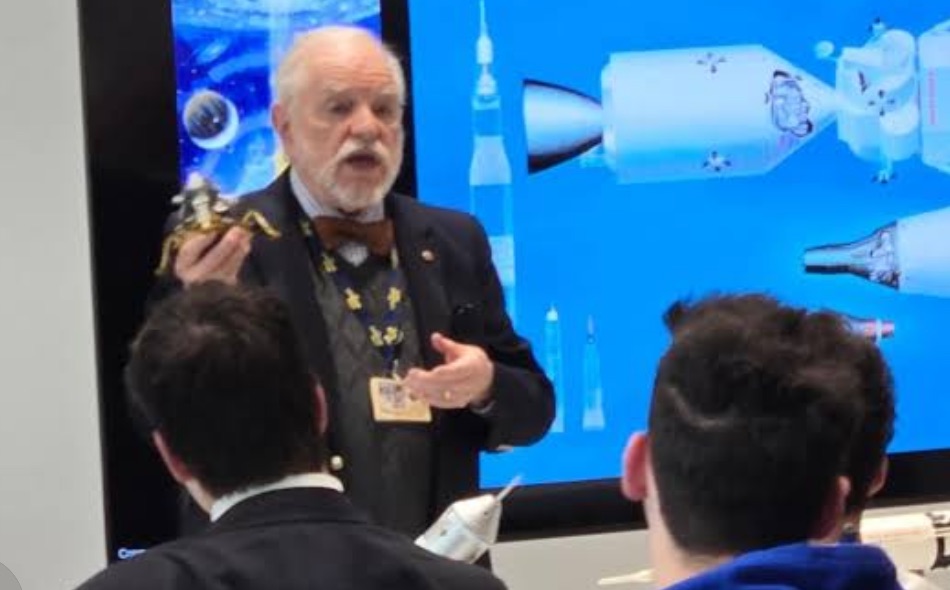
As a collaborative initiative, students from both the History and the Aviation Clubs hosted a presentation by former NASA Protocol Officer John Rantal on May 11 in the FCAA’s Maria Regina Room.
Rantal spoke about his time working under NASA during the height of the 1969 Manned Moon landings. He was present near the Mission Controls Room when Apollo 11 first landed on the moon and distinctly explained to the audience how the shuttle operated.
Rantal also discussed each Apollo mission he was involved in, including Apollo 1, which never made it off the ground due to a fire, Apollo 10, the final “dress rehearsal” for the first crewed moon landing, and Apollo 11, the first successful moon landing. With multiple diagrams and props, he explained how each shuttle operated, leaving the audience captivated by the complexities of the spacecraft and his experiences during this exciting time in American History.
Junior Abigail Hassett, History Club vice president, expressed why she was so intrigued with this presentation. She says, “I went to the presentation because I thought it was interesting to hear about the famous NASA moonwalk from the perspective of someone who was actually there. As someone who was born around fifty years later, I think it’s interesting to see the state of mind and the way it impacted the world at the time.”
Presentation coordinator Isabella Law, a junior, states, “It was fun setting up this event. The speaker was one of my eighth grade teachers, so I was the messenger between him and Mr. Cartier. These stories also increased my love for the sciences of space and helped me appreciate more the work and the lives it cost to get into space in the first place.”
Isabella continued, “I think what stood out to me was that there were planned missions after Apollo 17, but due to budget cuts, they never went up. The Apollo 19 lunar lander is in the Cradle of Aviation. I love learning about such historical events in such a personal way.”
One of Rantal’s major points that really stuck with some students and teachers was his religious perspective. While many people think that religion and science do not mix with each other, Rantal related that he was a pastor before he started working at NASA, and with his spiritual teachings, he was able to look at the vast concept of space with a whole new perspective.
History Club and Aviation Club were designed to help students explore the fascinating academic topics in addition to and beyond the curriculum of the classroom. Students come every week to learn about different topics in depth and discuss further about the vast subject. Aspiring historians and aviators can contact Mr. Cartier or Mr. Bursig to become a part of this exciting experience.